Personal
Me, Myself, and I
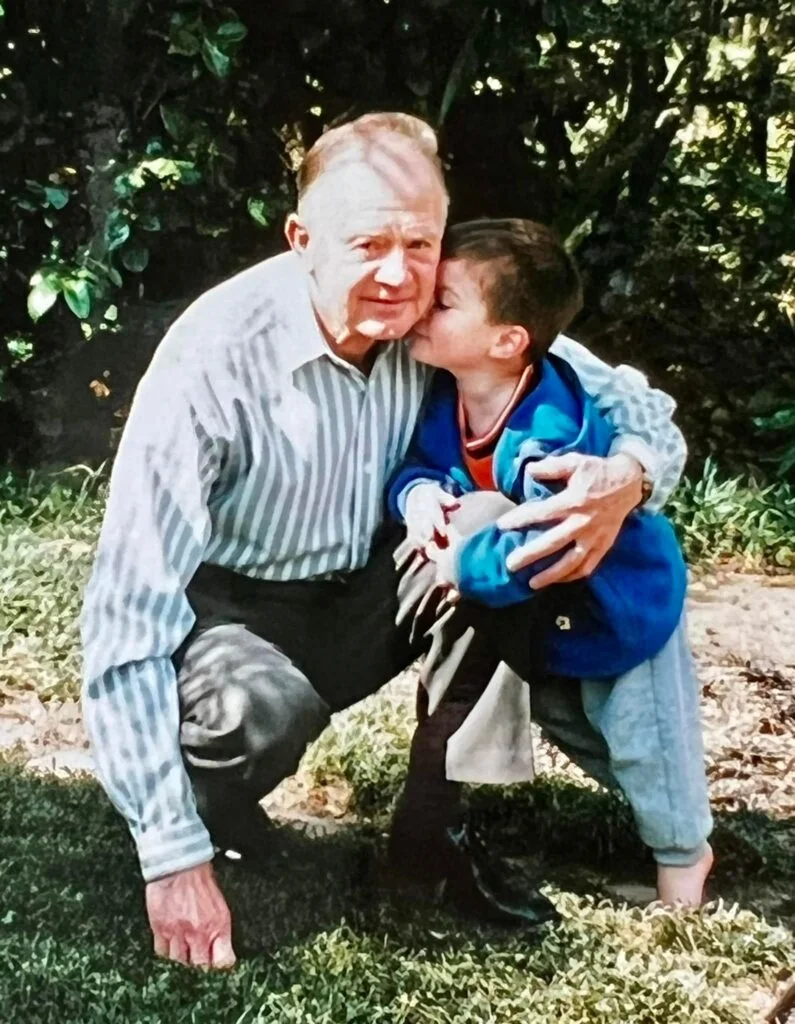
Hi there, my name is Thomas Elton, but I also like going by the name Tom, a tribute to my late grandpa! I was born in Sydney (Australia), where I have spent most of my life. In 2022-2023, I spent a year in the United States on exchange to Philadelphia, a pivotal moment in my life of great personal development.
I’m fascinated by science, and I love to learn. This love for learning has grown to a love for teaching which is what most of my research revolves around now. More information about this can be found by toggling to “Professional Manifesto” above.
In my free time, I love to spend time with friends and family. When I’m not spending time working on passion projects, I love visiting my friends. I am very much a people person who loves to be around people!
I am a Christian and love to spend time developing and reflecting on my faith. One way I do this is through reading the Bible, but also reading different books exploring various theological topics. In general, I do have a love for reading, and I appreciate how, through reading, I can come to an appreciation of different people’s points of view. As an aside, I am definitely one of those people who buys books with very good intentions of reading them, but then find them sitting on my bookshelf for months/years. I’m sure most people can relate 😅
As will be explored more in my professional manifesto, I wholeheartedly believe that life would be a dull place without learning. In general, I look forward to periods like holidays, as I find the ability to learn something new outside of the confines of a rigid work schedule exhilarating. I know this will make some of the high school students that I tutor reading this cringe, but I do think that learning is a privilege, and we are so lucky to be in an era where access to education is becoming more and more accessible.
Website Purpose
Initially, the main motivation for the construction of “tjelton.com” was to document my time spent on my year-long exchange to the University of Pennsylvania (USA). I saw “tjelton.com” as an avenue in which I could share my experiences from abroad with family and friends, as well as anyone else who is interested. I understand that my writing style for my exchange posts may not be all that interesting (it is a writing style I am still developing), but I love looking back at the blog, as personally, it acts as a diary documenting some of the special memories I had with friends.
Now that I have finished the exchange, some of the big purposes of this website include:
- An avenue in which I can showcase my portfolio (i.e. the cool things I’ve been working on).
- Sharing of posts related to teaching and technology.
- Other miscellaneous stuff that I want to write and share about.
With my blog posts, I do try to push out content when I get spare time, and so it will obviously not be as polished and well-edited as if reading a book. However, I do hope that readers find the content interesting, and I hope to develop as a writer with more and more practice.
Thanks for stopping by, and if you do want to find out a bit more about my professional manifesto, please toggle to that section at the top of this page!
Professional Manifesto
A Personal Tale
As mentioned in the “personal” part of the ” About Me ” section, I have a love for learning. I have this vivid memory of when I was 13 years old and in Year 7 (the first year of Australian high school), walking up the long road to the main academic precinct of my high school. I was feeling a strong sense of joy. High school was my first experience of being enrolled in many different subjects, from German to woodwork. It was a smorgasbord of learning! Looking back some 10 years later, I am proud of how excited I was about learning. At that snapshot of time, I clearly realised how special it is that I have the means of an excellent education, an institution where I could learn new things.
In Year 7, my favourite subject was science, and so I dedicated a disproportionate amount of time to studying and working on my science student research project. Receiving good grades, when progressing to Year 8, I was placed into the second-highest science class within Year 8. Being placed into this class, combined with the belief that school is important, led to a desire to improve my rank within my other classes. I spent more and more time studying, and was starting to do better and better in school.
However, this is sadly where the story turns bitter. With a desire to be the best that I could, over the future years of high school, I started to lose track of what was really important. I became consumed with my short-term vision of getting the best grade that I could. I was so consumed, in fact, that in hindsight, the love of learning has been corrupted. In sad contrast to my Year 7 self, my main priority was grades. From Year 7 to Year 10, I saw a brutal transformation, where I was now suffering from extreme anxiety around assessment tasks. I had put exams on such a high pedestal that I became incredibly stressed about them, and needed to seek help.
Why take you along this very personal story? Well, I definitely think it’s risky being so honest, as it’s very easy for people to be critical of such experiences as my own.
This story encapsulates my desire to be involved in education research. I do believe that the education system is in need of serious reform, and personally, I hope to play a part in this. I want to help the next generation of students experience the joy of learning that I had in Year 7. This is easier said than done – we very much exist in an education system which prioritises good grades rather than personal development and a genuine desire to expand knowledge. For example, I think it would be quite a common thing for students to opt to do an easier course (for example, at university) for a better grade, than challenging themselves and probably getting a worse grade.
Moving Forward
Whilst I definitely had some less-than-pleasant periods through high school, I was always drawn to teaching. I love helping others, and I also love spending time talking with people. My first few jobs were at my former high school, where I worked as a private tutor, library tutor, and also held a pastoral position in the boarding house supporting Year 7 students who reside at the school.
I never really thought much about going into education research until I did a research project in 2020 with Dr Reyne Pullen and Dr Stephen George-Williams, where I conducted and analysed student interviews, to gauge student perspectives on an active learning task prevalent in Chemistry at the University of Sydney.
I also started to work as a tutor (USA: teaching assistant), teaching data science and computer science at the University of Sydney and the University of Pennsylvania. I was also fortunate enough to receive a lecturing position teaching an undergraduate introductory data science course at the University of Sydney whilst I was still completing my undergraduate studies.
These experiences made me want to combine my love of teaching with becoming an education researcher focusing on how we can best use data and computer science techniques to better support students. This led to me being supervised by Dr Jonathan Kummerfeld at the University of Sydney for my Honours thesis, doing research on how we can use natural language processing (a field of artificial intelligence) techniques to best support educators.
Looking to the Future – Research in Education
My research interests lie at the intersection of computer science, data science, and education. I am broadly interested in any projects related to the intersection of these fields, but have a keen interest in developing and evaluating AI-driven systems and approaches to support teachers and students.
In particular, one of my key interests is leveraging the recent advancements in natural language processing (NLP) to create software tools that can be seamlessly embedded into the classroom. I see NLP as a means of drastically improving the accessibility and feasibility of active learning capabilities in the classroom. For example, imagine a system that can deliver unique questions to students and adjust the question difficulty based on how the student is progressing.
Personally, I believe that NLP will allow educational institutions to radically change how we approach teaching. The existing education systems have not changed all that much since the Prussian education models developed in the late 18th and early 19th centuries. I think that our needs have changed quite a bit since then!
The current system of teaching, where a single teacher didactically presents material to a class, may be appropriate for the average student. However, there will be students who are struggling and other students who are doing well and need to be extended. The current teaching system of one-size-fits-all is not conducive to efficient learning. I believe that NLP can allow for a more nuanced approach to teaching, where systems can tailor individualised education programs to the needs of a student.
Also, just as a general note, I’m not at all recommending that my idealised version of education in the future is a system where there are no teachers. I think teachers are important, and passionate teachers have guided me to where I am today. I do, however, see that NLP offers an ability to support classroom teachers, leaving teachers to do what they do best – supporting and mentoring students as they learn how to learn.
I love to collaborate, and am currently involved in quite a few interdisciplinary projects. The current projects I’m working on can be found on the home page.
In general, my research interests are in:
- Scaling active learning techniques using AI.
- Active learning (i.e., learning by doing) is impactful for students, yet it can take a long time for teachers to implement. A key research interest is about how we can leverage AI to facilitate and scale active learning in the classroom.
- Pedagogy, especially in feedback, and how AI can be used to augment how we give feedback.
- At the moment, my key pedagogical interest is feedback. Feedback is an essential part of learning, yet it is often implemented ineffectively. I am interested in researching the alignment between current institutional feedback practices and evidence-based recommendations from the educational literature.
- As a PhD student collaborating with academics across disciplines, I have also developed broader interests in higher education research. Recently, I have explored students’ perceptions of pre-lecture quizzes as a tool for active learning, reasons for low attendance at live lectures, and the alternative resources students use, and factors contributing to students failing units of study.
- Natural language processing
- Foundational to my work are natural language processing (NLP) and machine learning (ML) techniques. I am interested in how these techniques can be effectively applied to building ed-tech systems. I am also interested and actively involved in making education-related NLP benchmarks.
- AI Literacy
- Investigating students’ and teachers’ current literacy with AI, which encompasses measuring current understanding of what constitutes AI, how to use AI effectively, and the social and ethical implications of using AI. I am also interested in how AI literacy can be embedded in the classroom and as part of teachers’ professional development.
- Education Technology
- Educational technology is a general term that encompasses much of my research. Ed tech explores technologies designed to support learning. It involves developing systems that integrate effective human-computer interaction with sound pedagogical practices.
- Educational technology is a general term that encompasses much of my research. Ed tech explores technologies designed to support learning. It involves developing systems that integrate effective human-computer interaction with sound pedagogical practices.
I love meeting new people. If any of this work seems to resonate, I’d love to hear from you! Please feel free to connect on LinkedIn!